
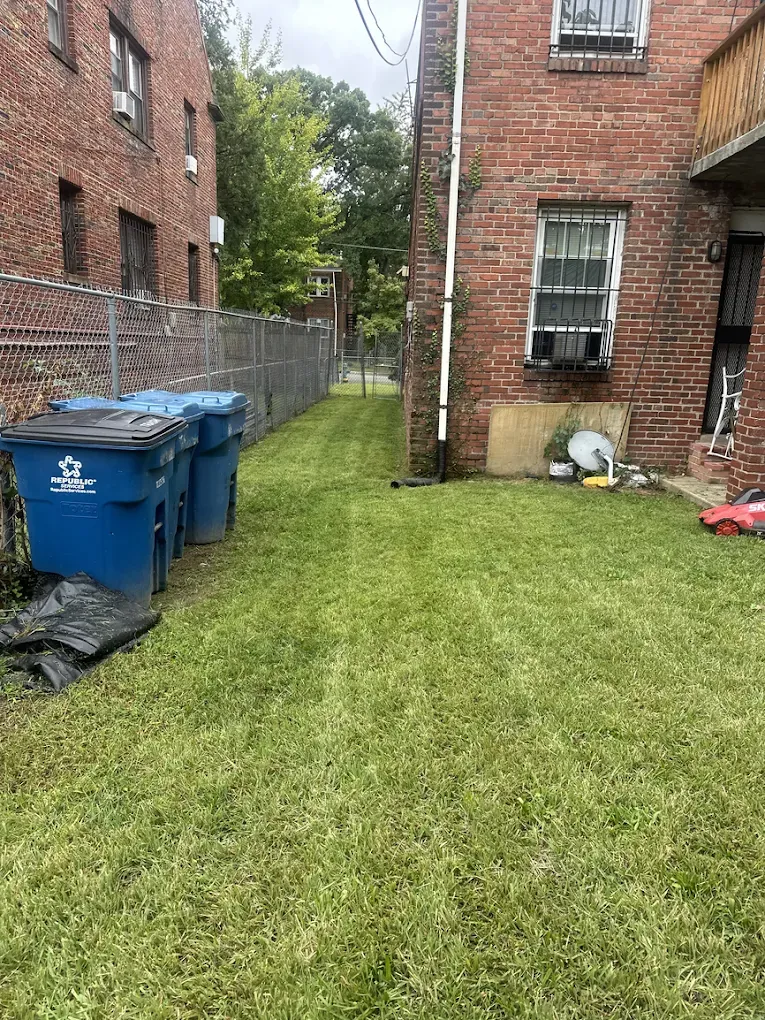
Turf That Stays Healthy Between Cuts
Lawn Mowing in Arlington for properties needing consistent maintenance and professional turf health
Proper mowing height determines whether grass develops deep roots and dense growth or struggles with shallow root systems that brown out during July heat, yet most homeowners cut too short in an attempt to extend time between mowing sessions. Routine lawn mowing from Kyle Landscaping maintains grass at three to three and a half inches, which allows enough blade surface for photosynthesis while shading soil to reduce weed germination and moisture evaporation. Properties in Arlington benefit from weekly mowing during spring growth and every ten days during slower summer growth, adjusted based on rainfall and temperature patterns that control how fast grass actually grows rather than following a fixed calendar schedule.
Mowing frequency matters because removing more than one-third of the blade length in a single cut stresses grass and forces it to pull energy from roots to regrow lost leaf tissue, which weakens the plant's ability to handle heat and drought. Consistent cutting at the correct height encourages lateral blade production and thicker turf that crowds out weeds naturally without requiring herbicide applications.
Request a mowing schedule based on your property's size, grass type, and seasonal growth patterns.
What Changes After Routine Mowing Begins
Each mowing pass uses sharp blades that cut grass cleanly rather than tearing leaf tips, which prevents the brown, frayed appearance that occurs when dull blades shred plant tissue and create entry points for disease. Mowing patterns alternate each visit to avoid creating ruts or compacted tracks where grass thins over time, and clippings are managed based on whether they add beneficial organic matter or create thatch buildup that smothers new growth.
After several weeks on a consistent mowing schedule, your lawn develops a more uniform appearance without the uneven growth spurts that create scalped areas when cutting returns to proper height, and curb appeal improves as neighbors notice the difference between maintained turf and overgrown, neglected grass. Grass stays healthier because regular cutting stimulates tillering, where each plant produces additional shoots that increase density without requiring seeding or fertilization.
Mowing schedules adjust seasonally because cool-season grasses grow most actively in spring and fall when temperatures favor root development, while summer heat slows growth and raises the risk of scalping or heat stress if cutting frequency does not decrease accordingly. Properties with partial shade, slopes, or high-traffic areas may require customized mowing heights to address conditions that affect grass differently across the same lawn.
Common Questions About This Service
Homeowners typically want to know how mowing schedules work, what happens with clippings, and how cutting height affects lawn health.
How often does mowing need to happen during peak growing season?
Weekly mowing during April through May and September through October matches the growth rate of cool-season grasses in Arlington, while every ten to fourteen days works for summer when heat slows growth and grass naturally enters semi-dormancy.
What is the benefit of leaving clippings on the lawn versus bagging them?
Clippings left on the lawn return nitrogen and organic matter to soil as they decompose, reducing fertilizer needs by up to thirty percent, but clippings should be removed during heavy growth periods when thick layers smother grass or create thatch buildup.
Why does cutting height matter more than mowing frequency?
Taller grass develops deeper roots that access moisture and nutrients beyond the reach of shallow-rooted plants, shades soil to reduce weed germination, and produces more energy through photosynthesis than grass cut below two and a half inches.
How does mowing direction affect the lawn over time?
Alternating mowing patterns each visit prevents grass from leaning in one direction and soil from compacting into ruts where mower wheels repeatedly travel the same path, which creates thin strips where grass struggles to grow.
What happens if mowing is skipped for several weeks?
Overgrown grass requires multiple passes to return to proper height without removing more than one-third of blade length at once, and sudden scalping shocks the plant into using root reserves for regrowth rather than maintaining healthy root systems.
Kyle Landscaping schedules recurring lawn mowing that adapts to seasonal growth patterns and keeps Arlington properties looking maintained throughout the year. Arrange ongoing maintenance that fits your property's specific needs.